




Description
Dulens APO Cambrian Prime: optical precision with character
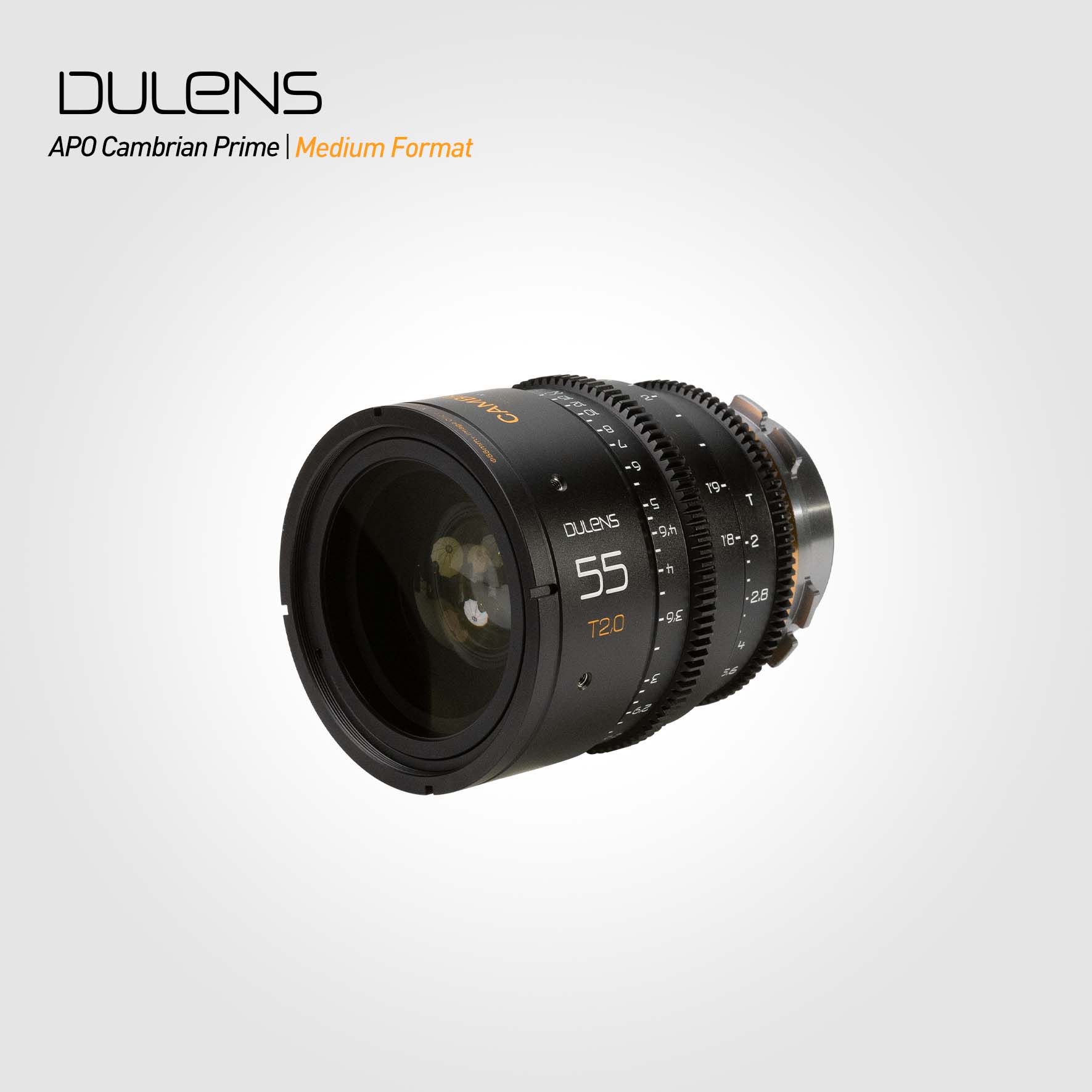
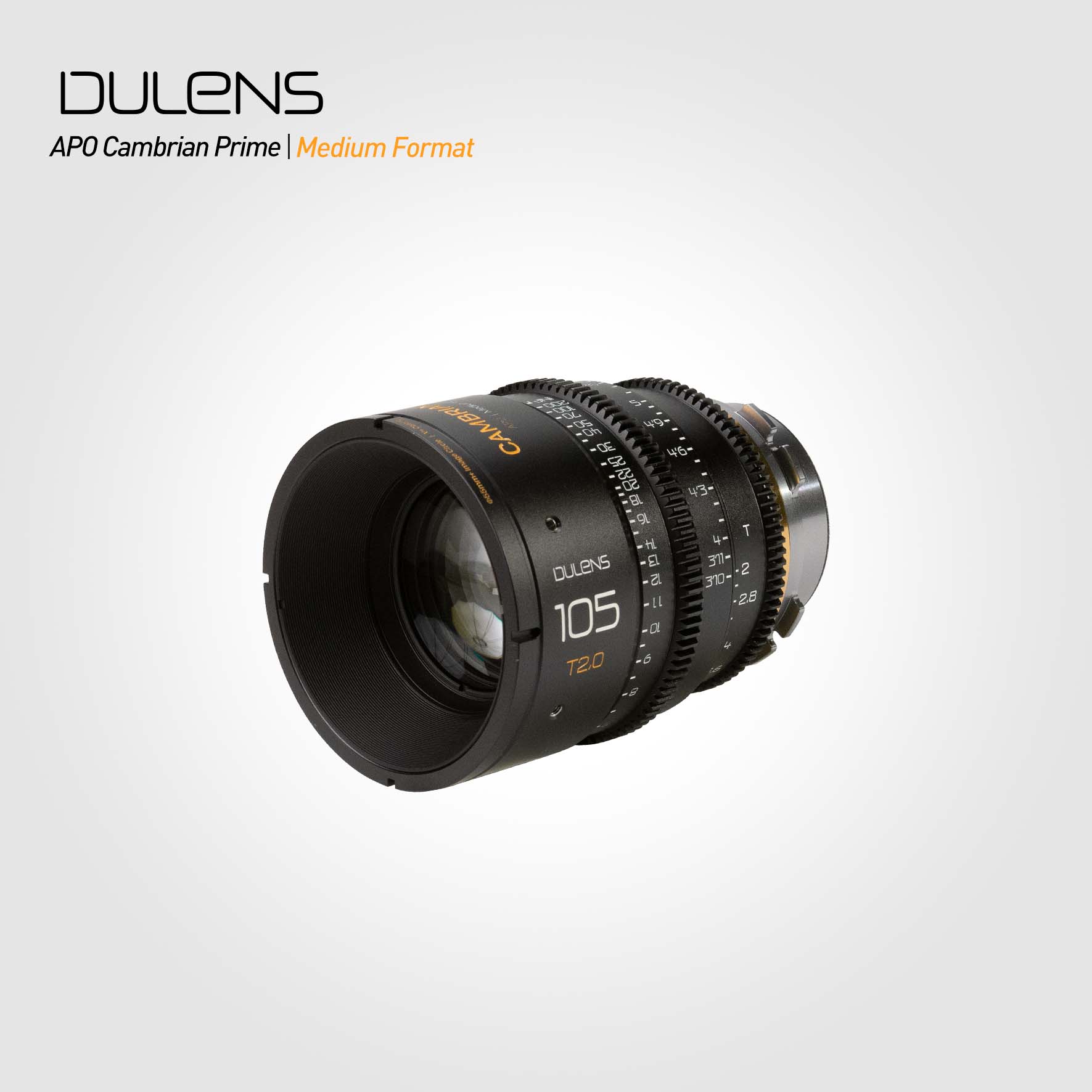
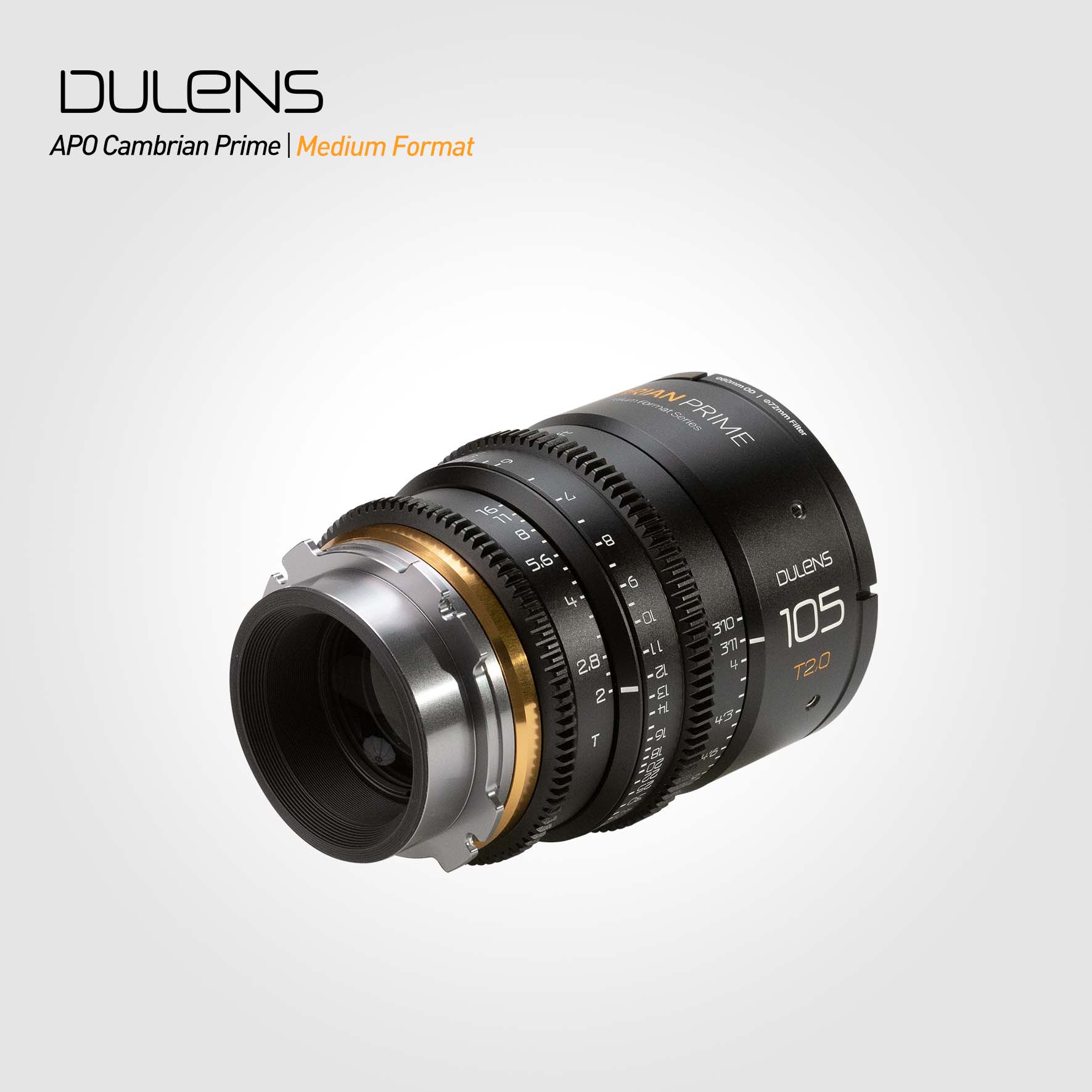
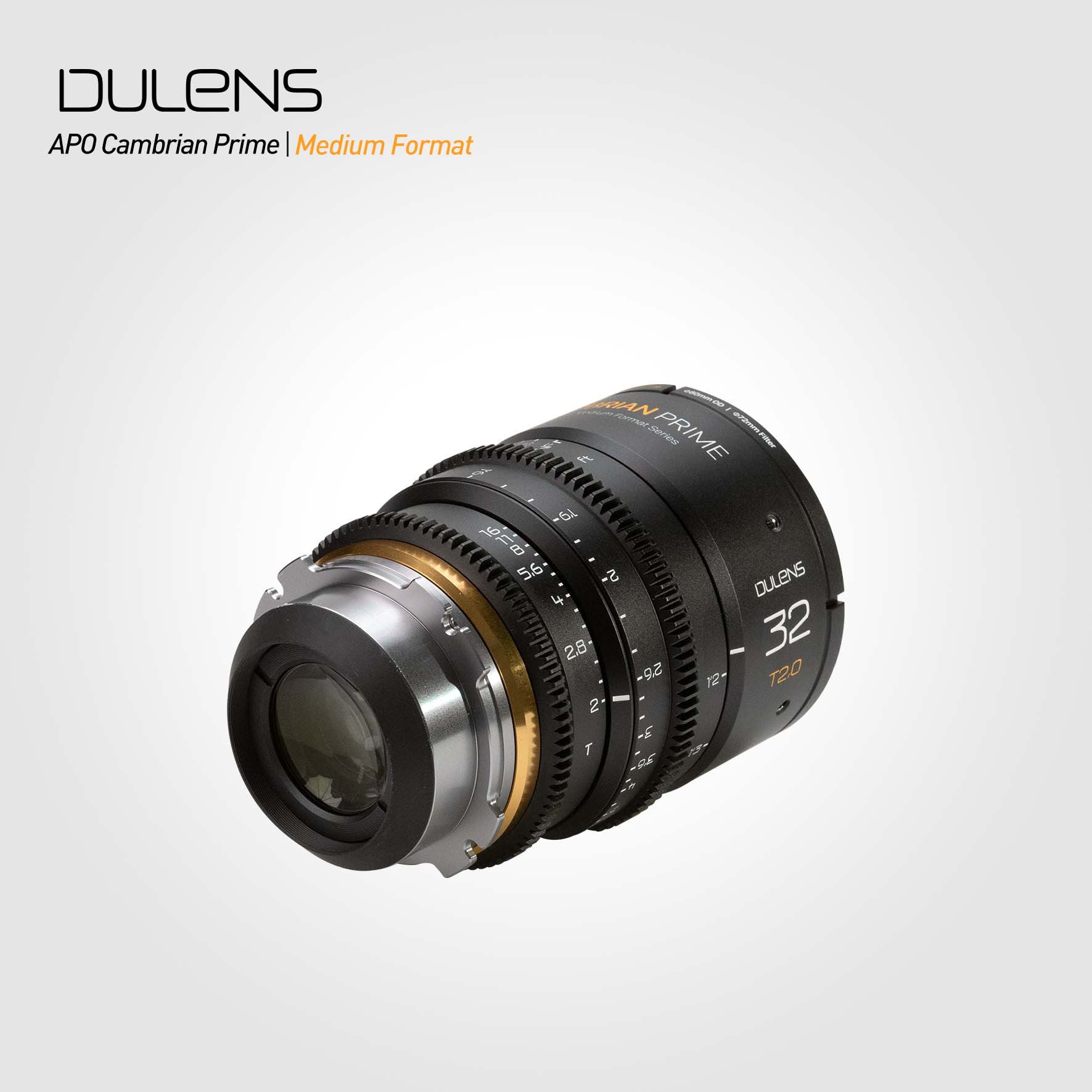
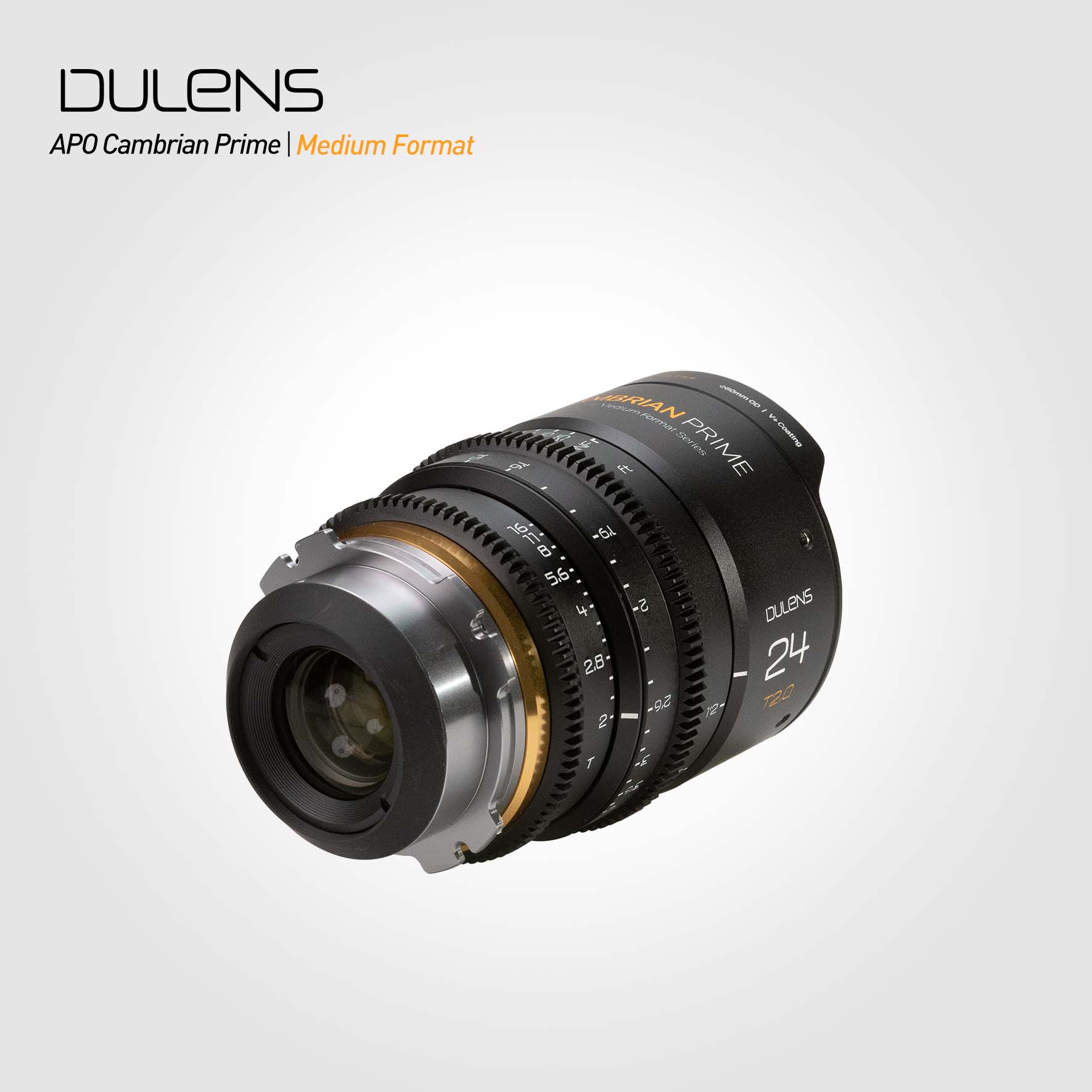
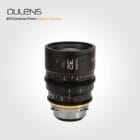
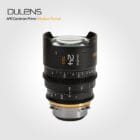
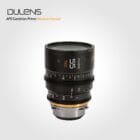
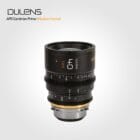
The Dulens APO Cambrian Prime series brings medium-format coverage into a compact, fast PL cinema lens set. At Gafpa Gear, we see Cambrian as much more than a solution for an unusually large sensor. These are lenses for cinematographers who want detail across the image, a clean separation of colour and a pleasing transition into defocus. They are equally at home on a full-frame cinema camera.
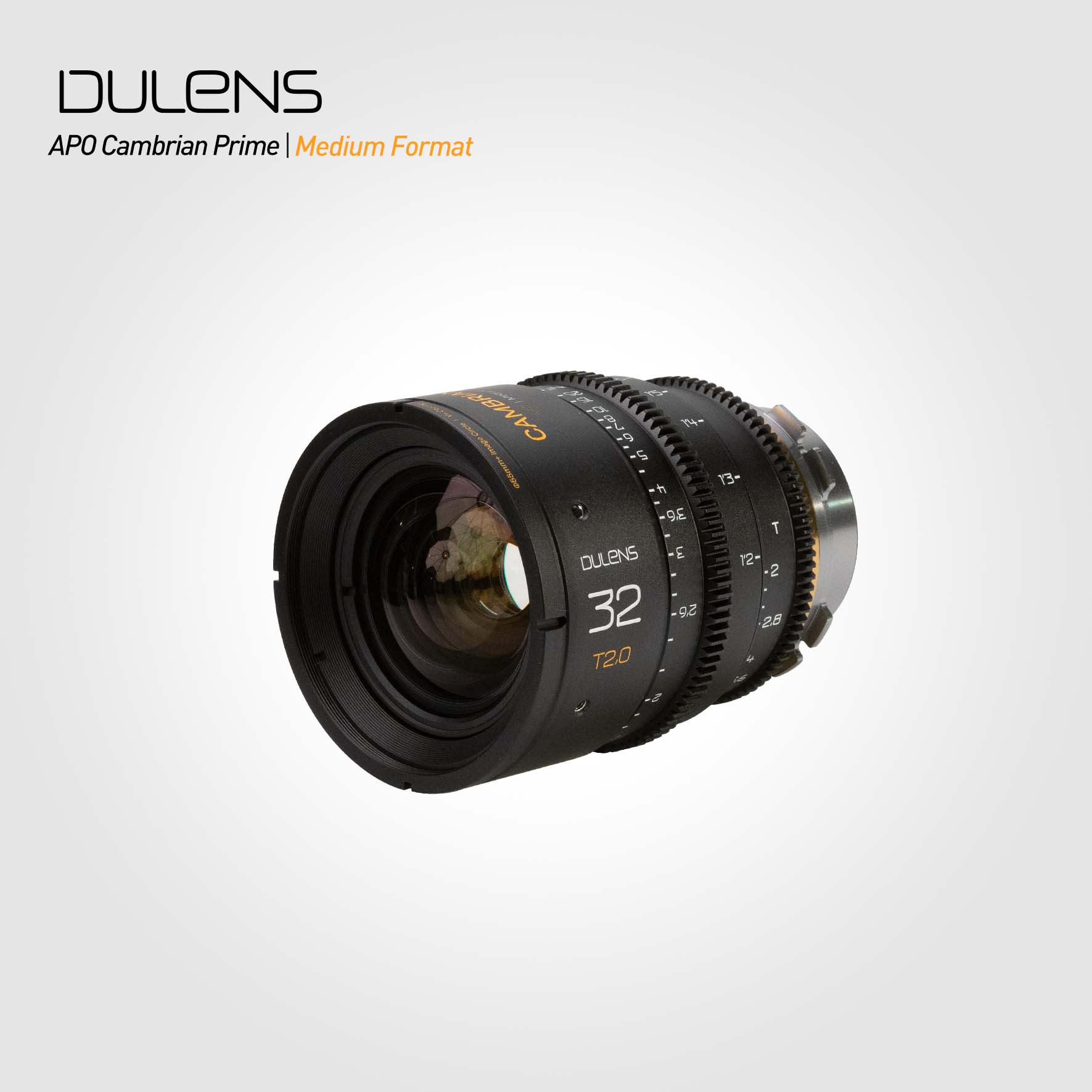
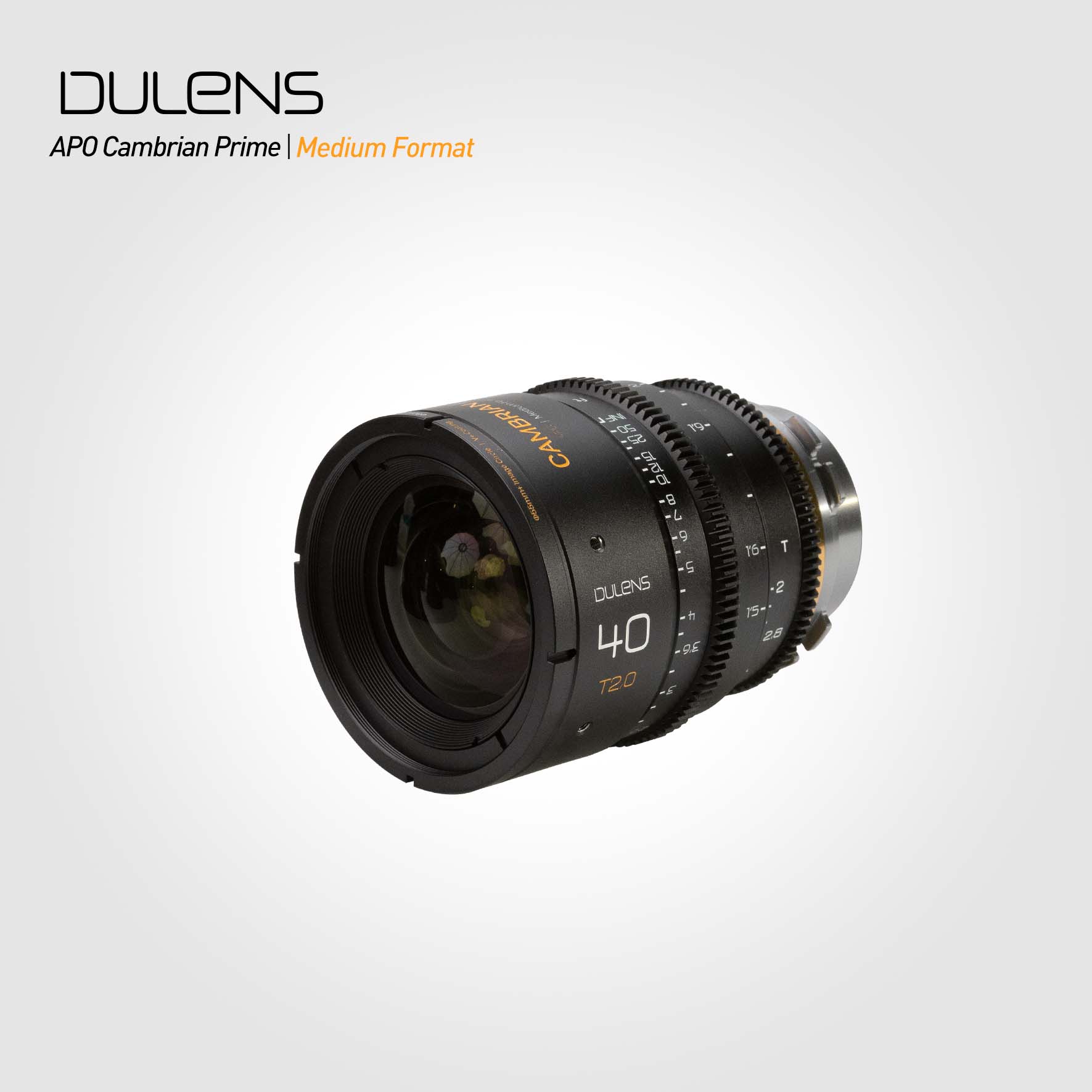
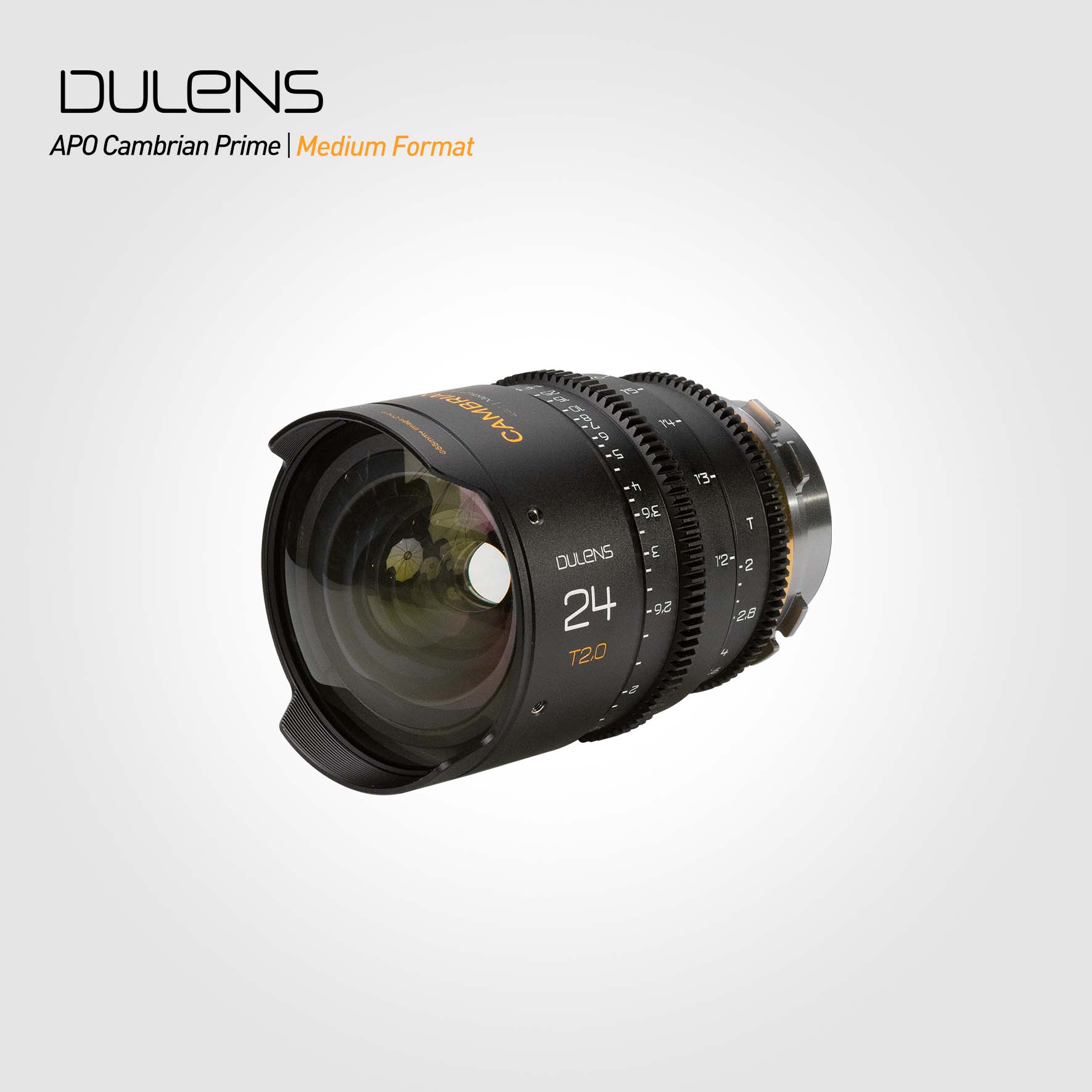
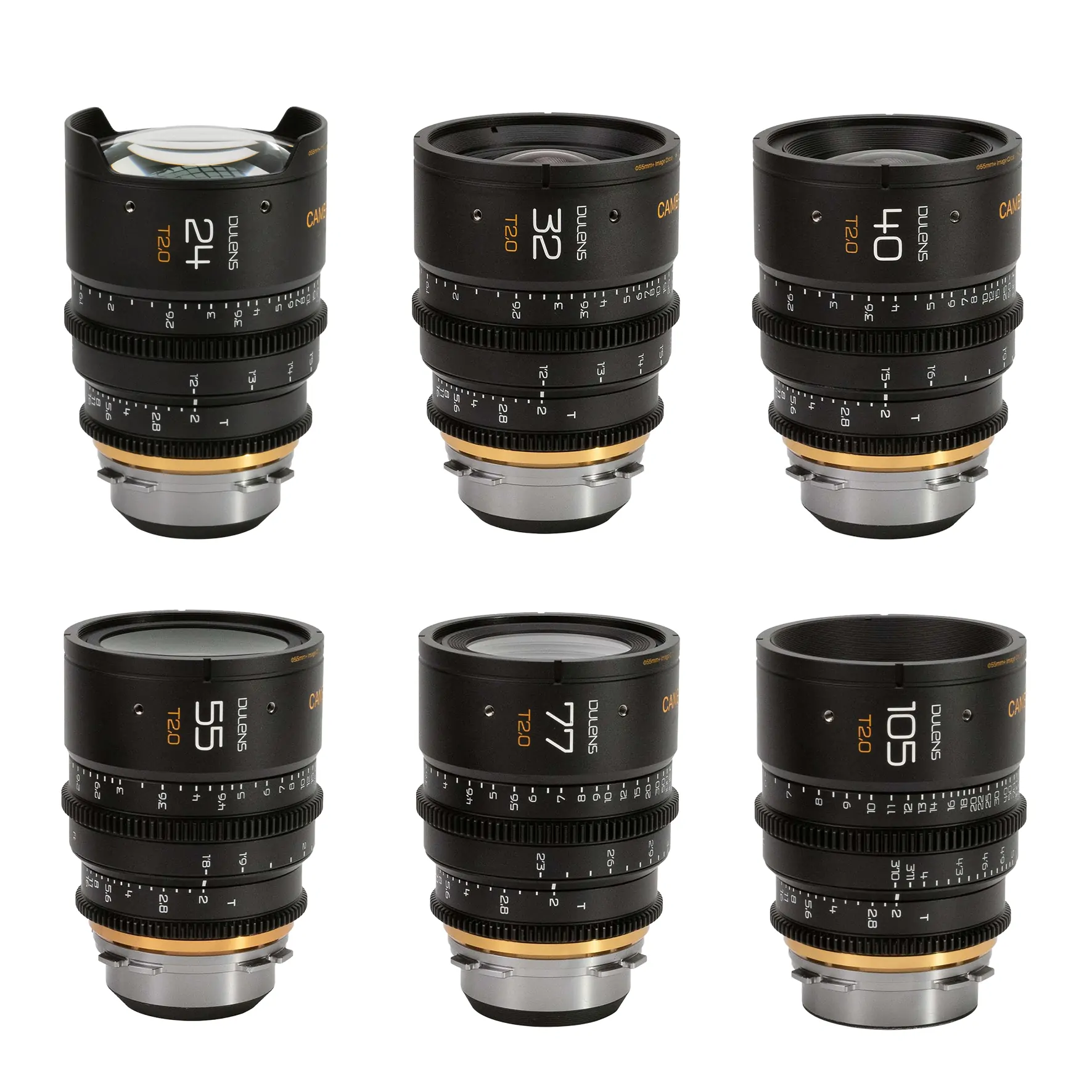
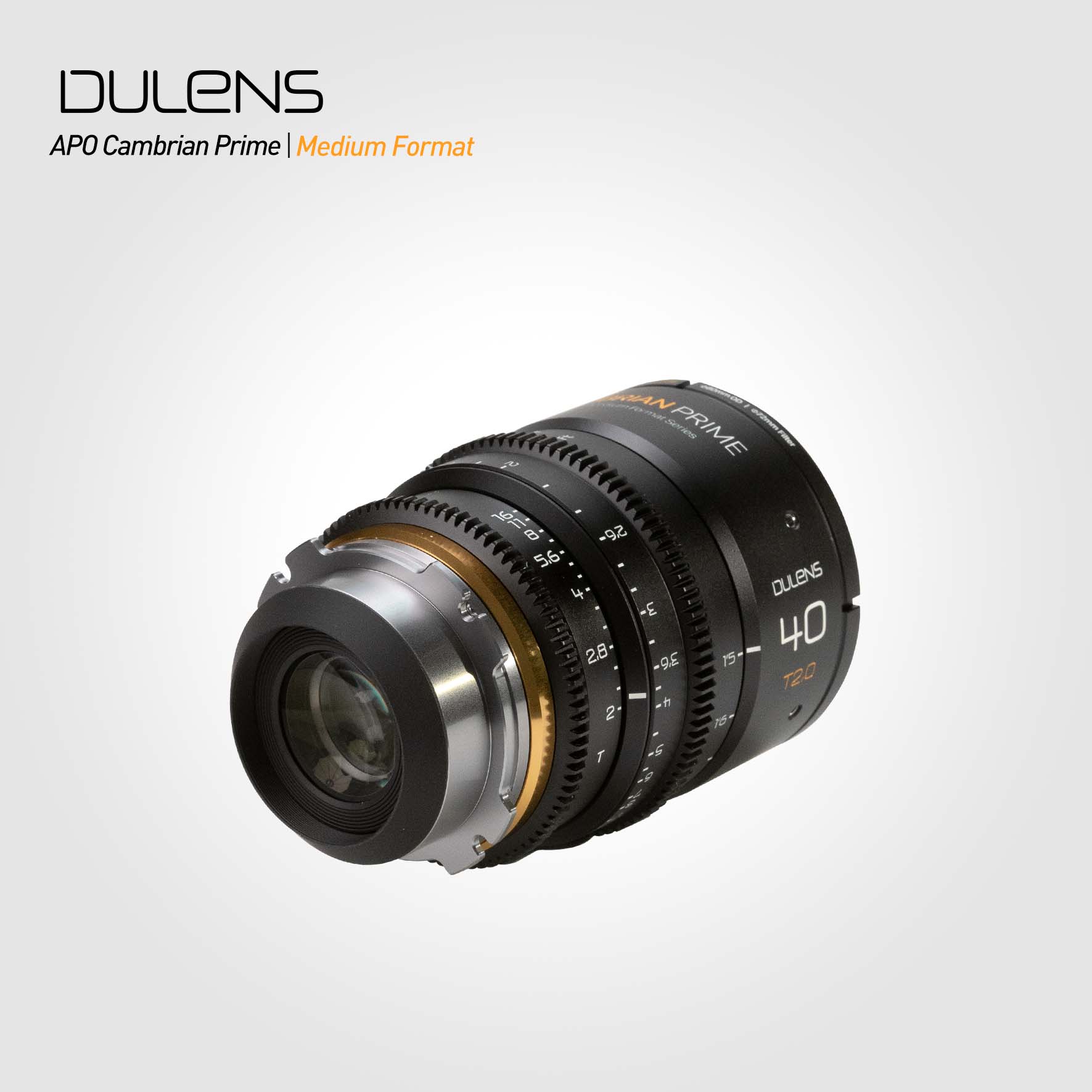
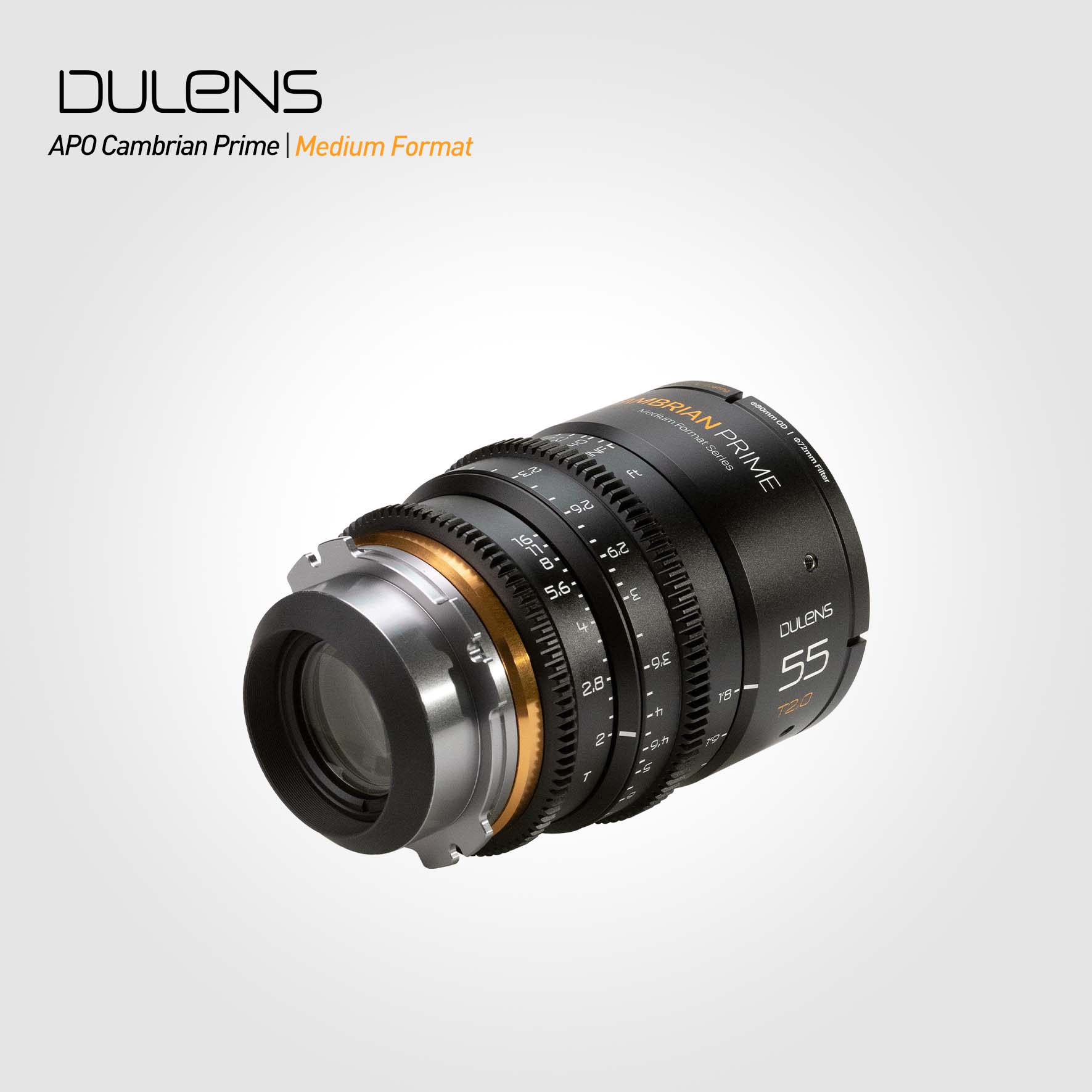
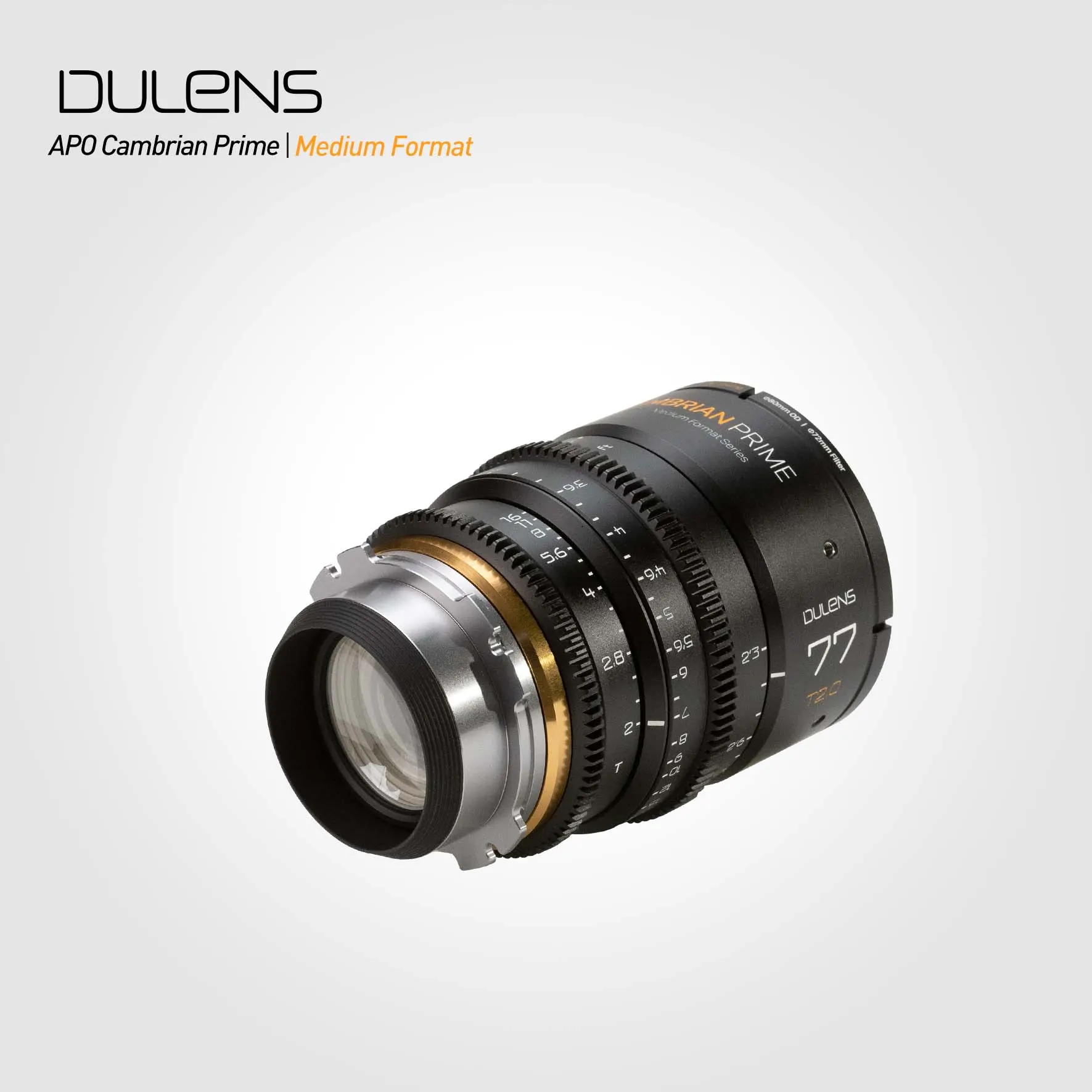
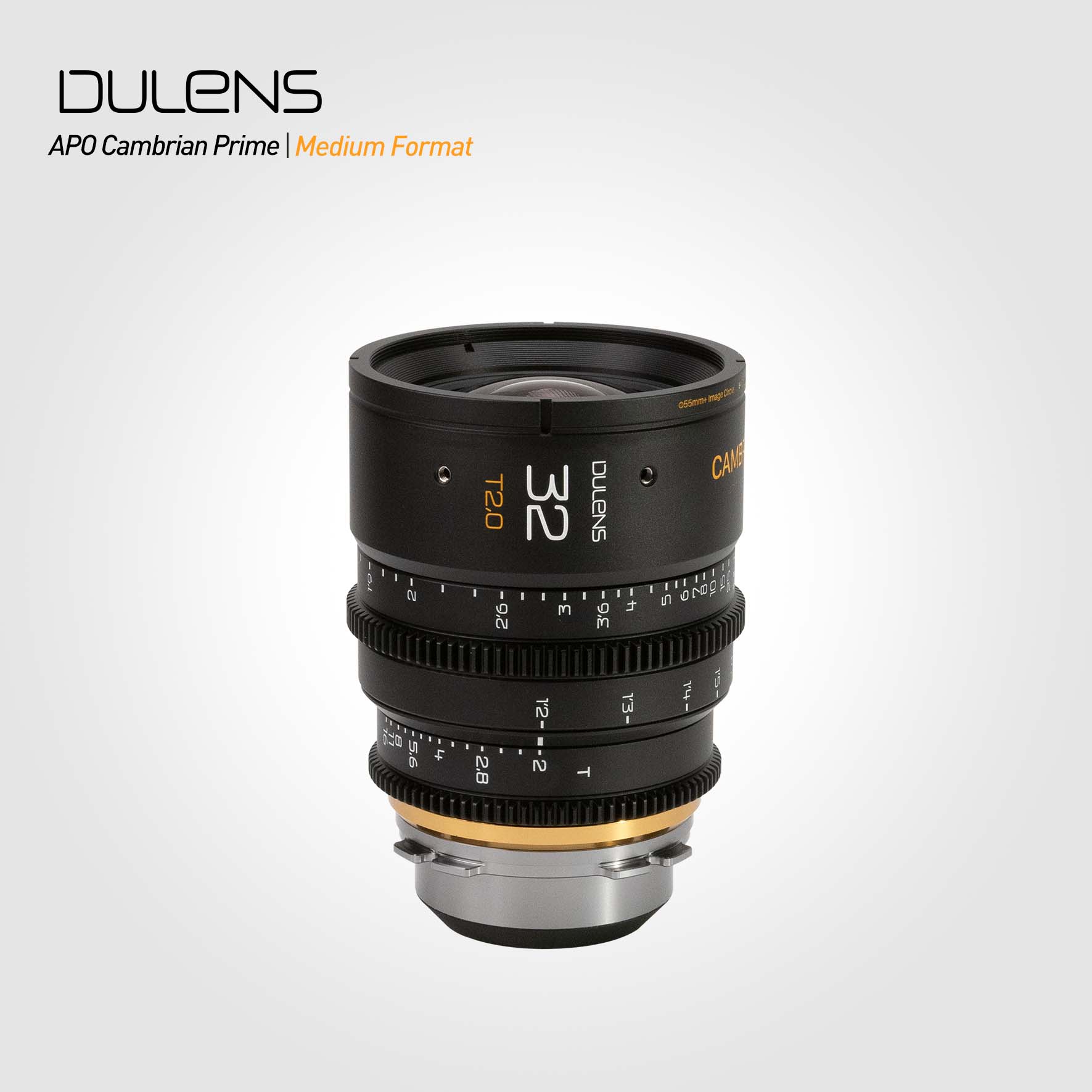
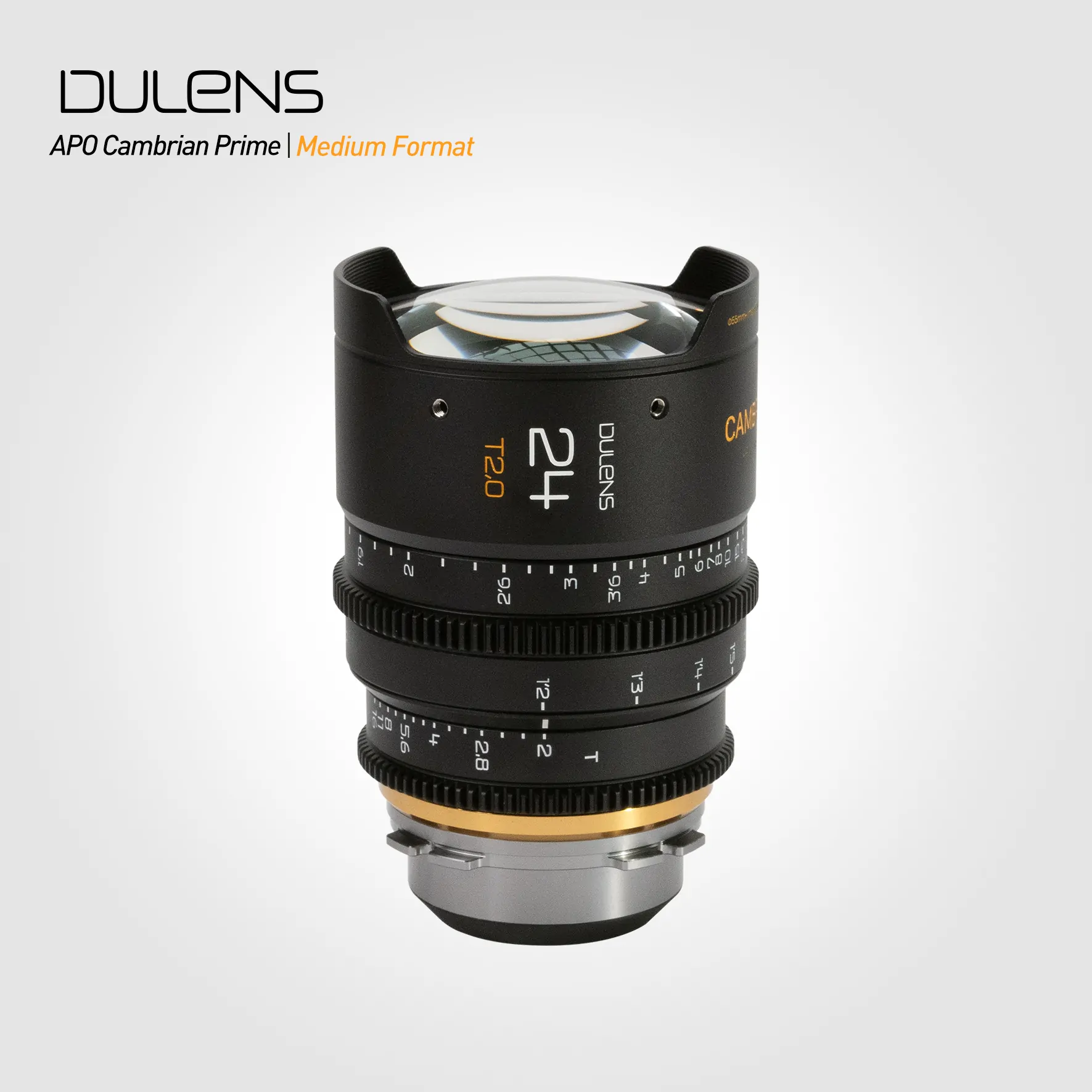
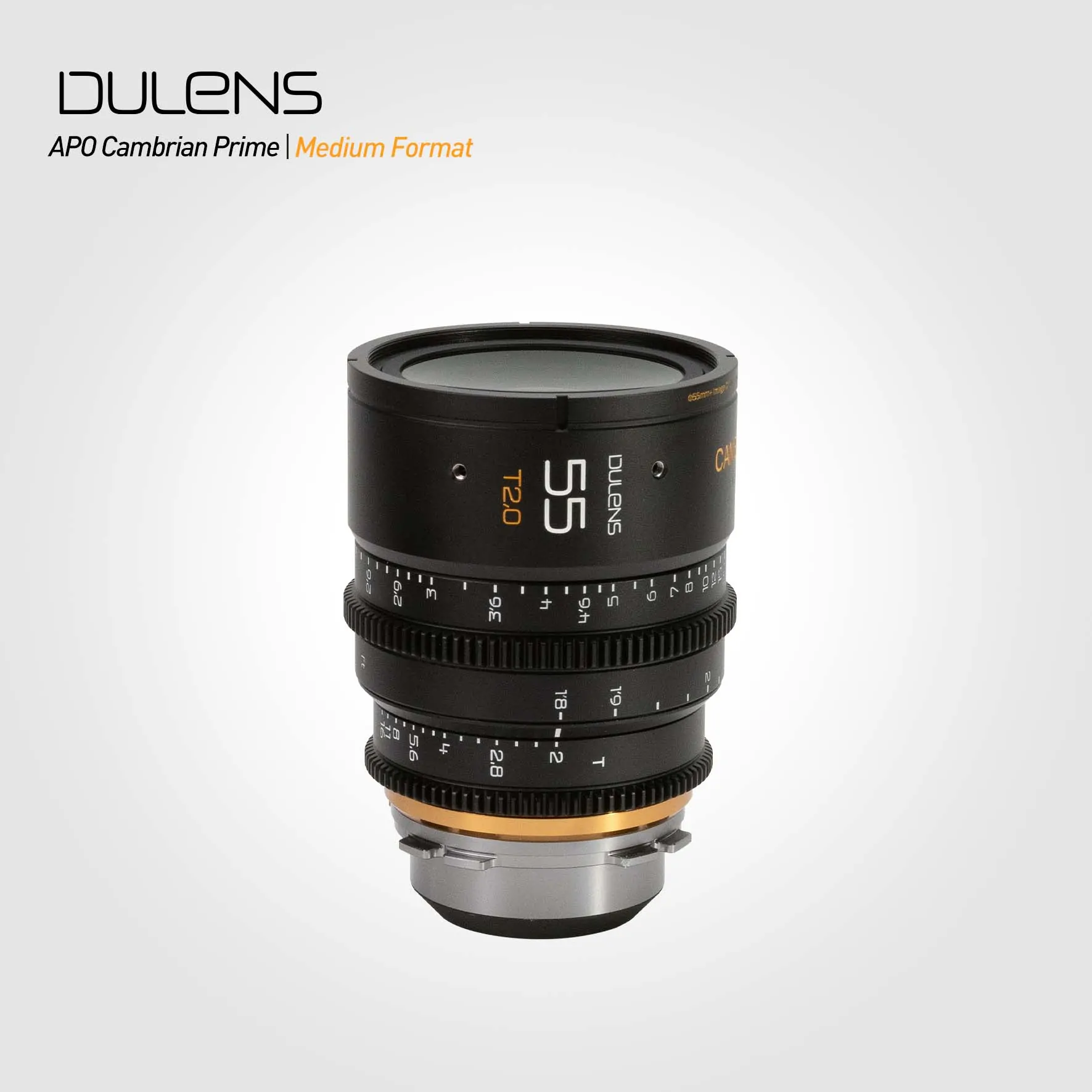
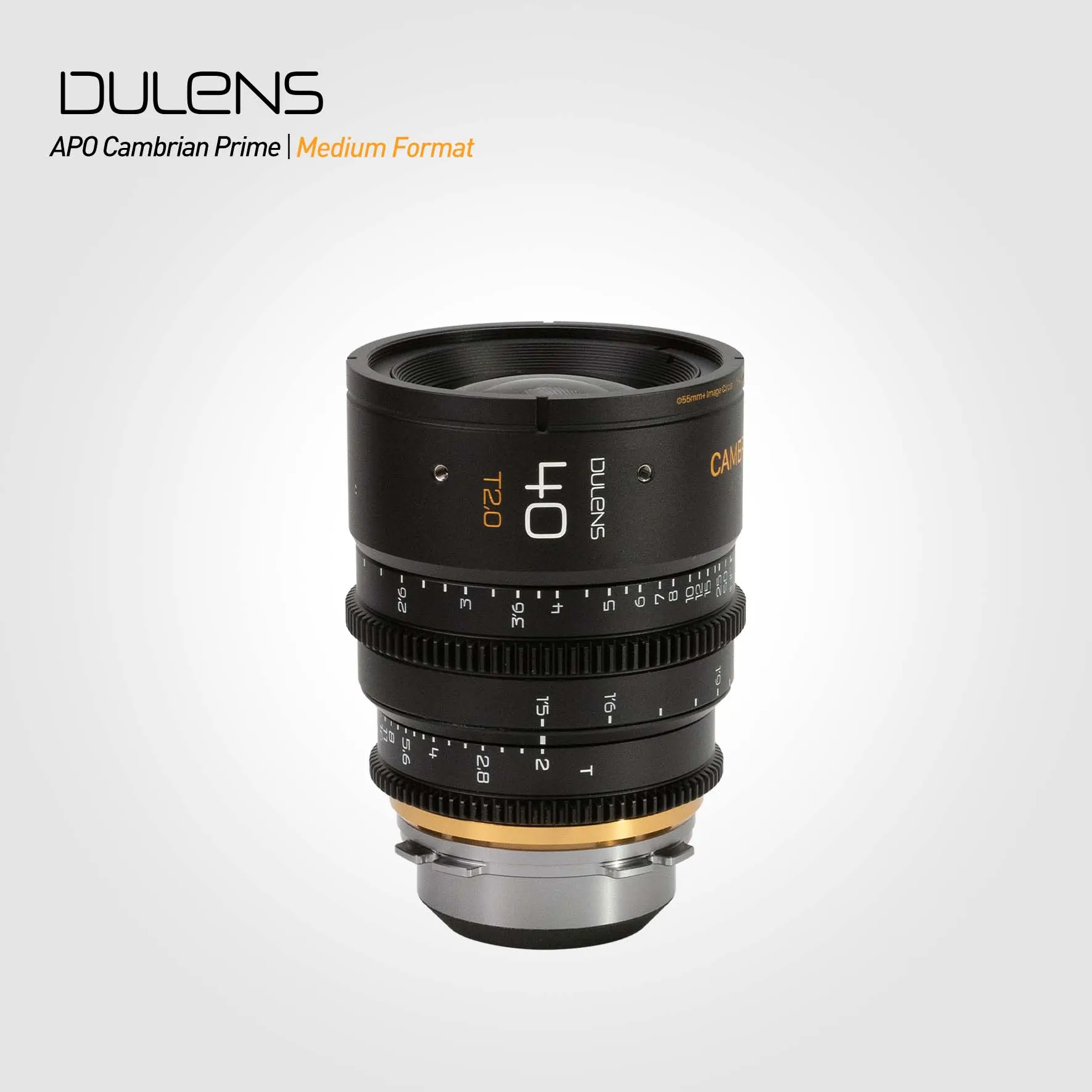
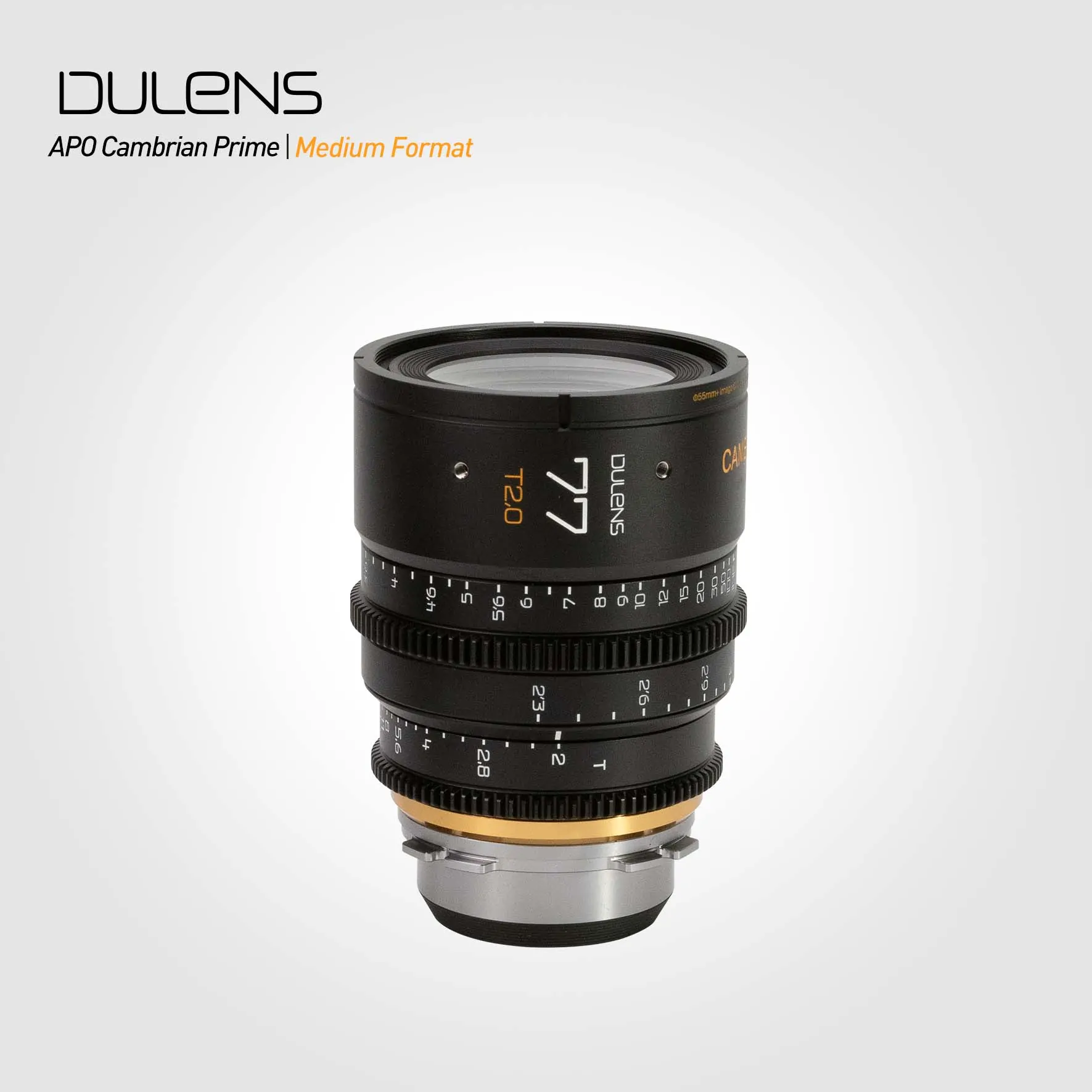
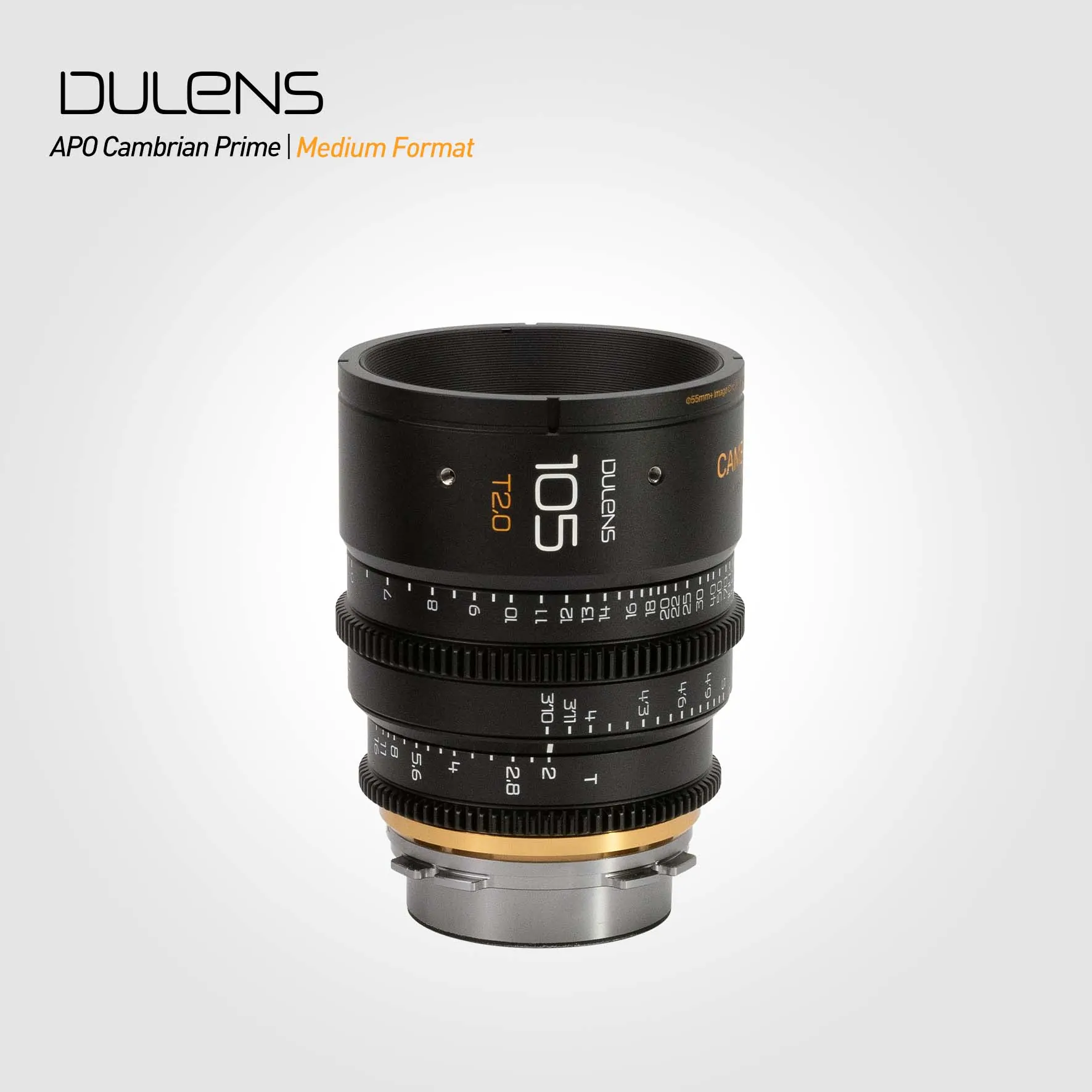
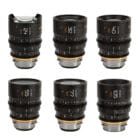
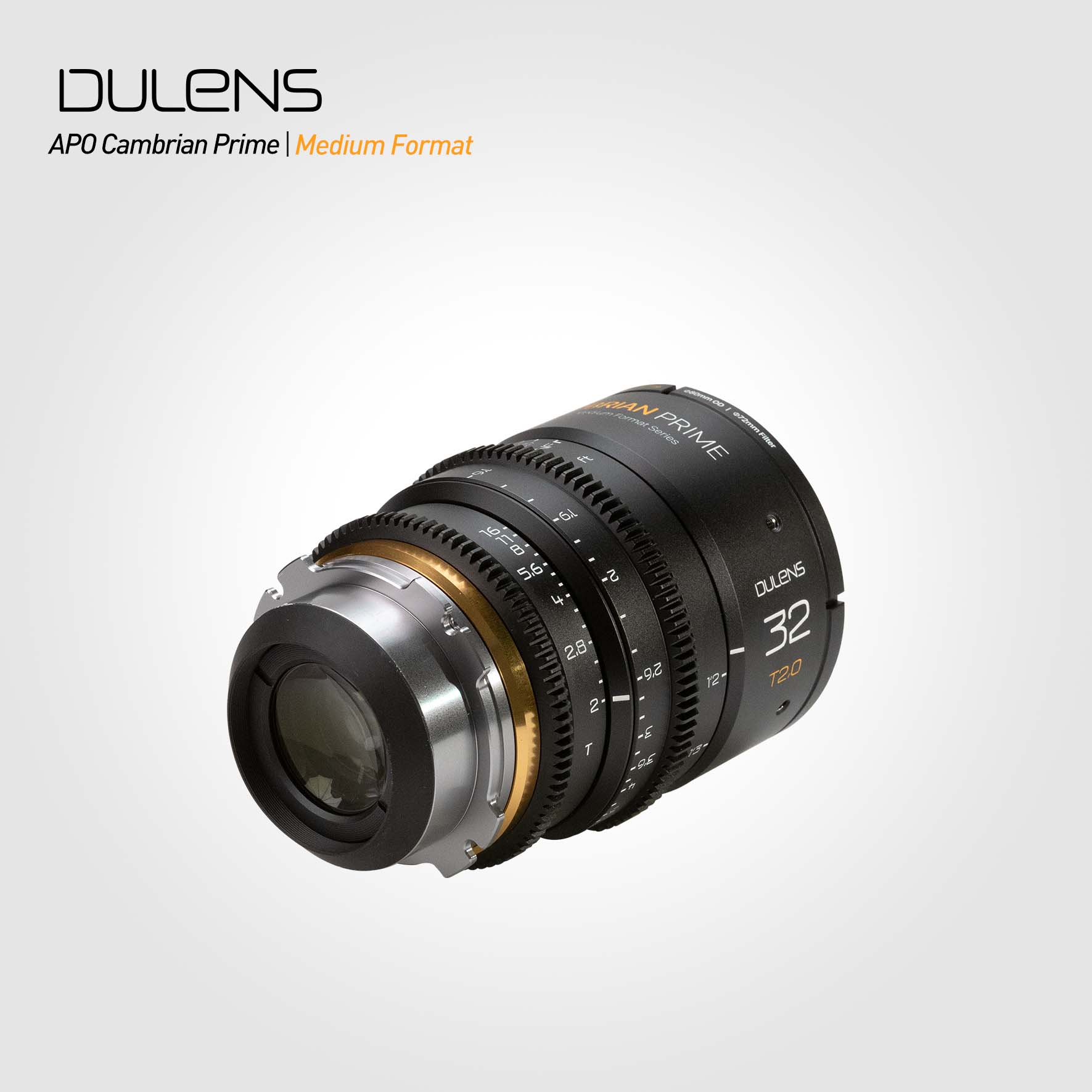
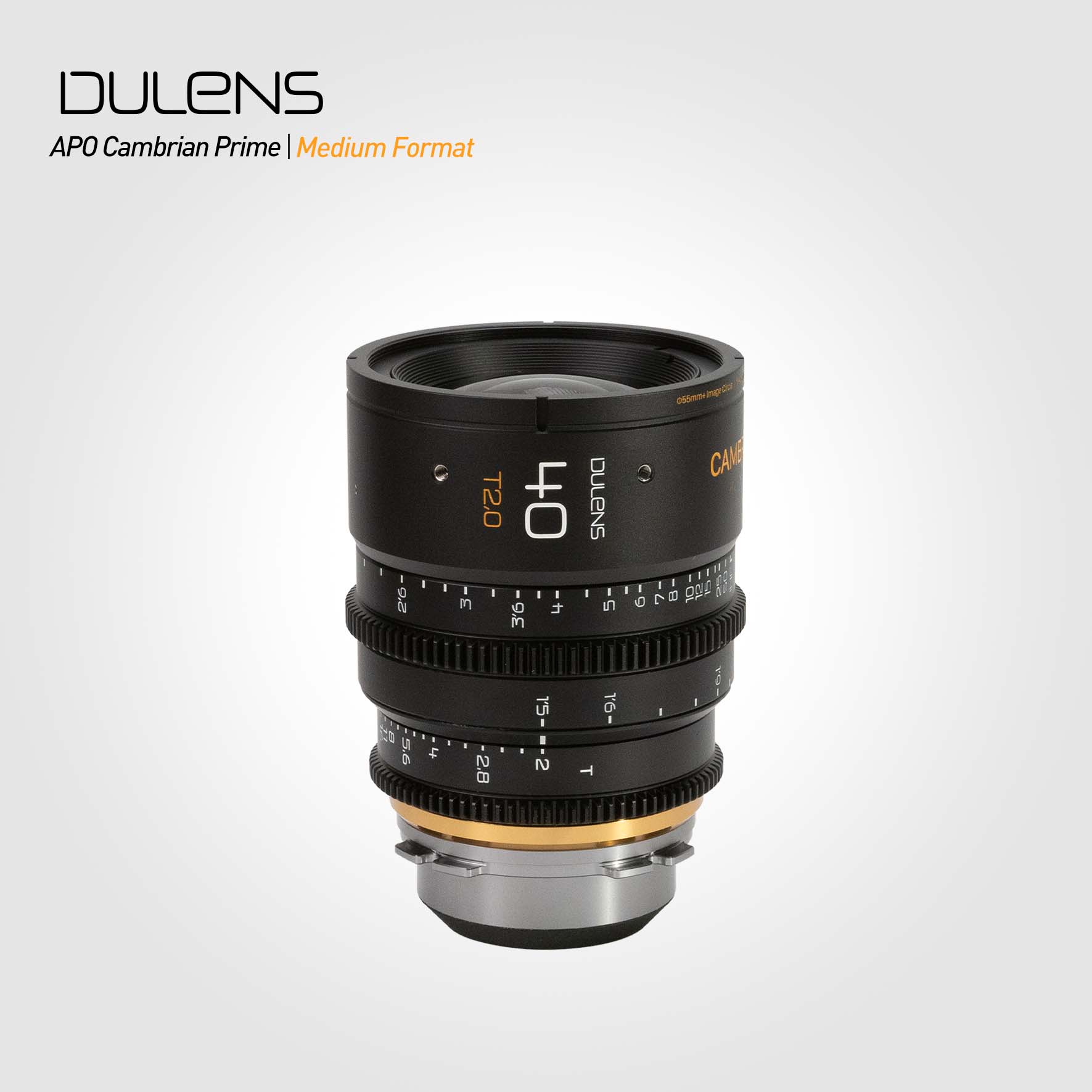
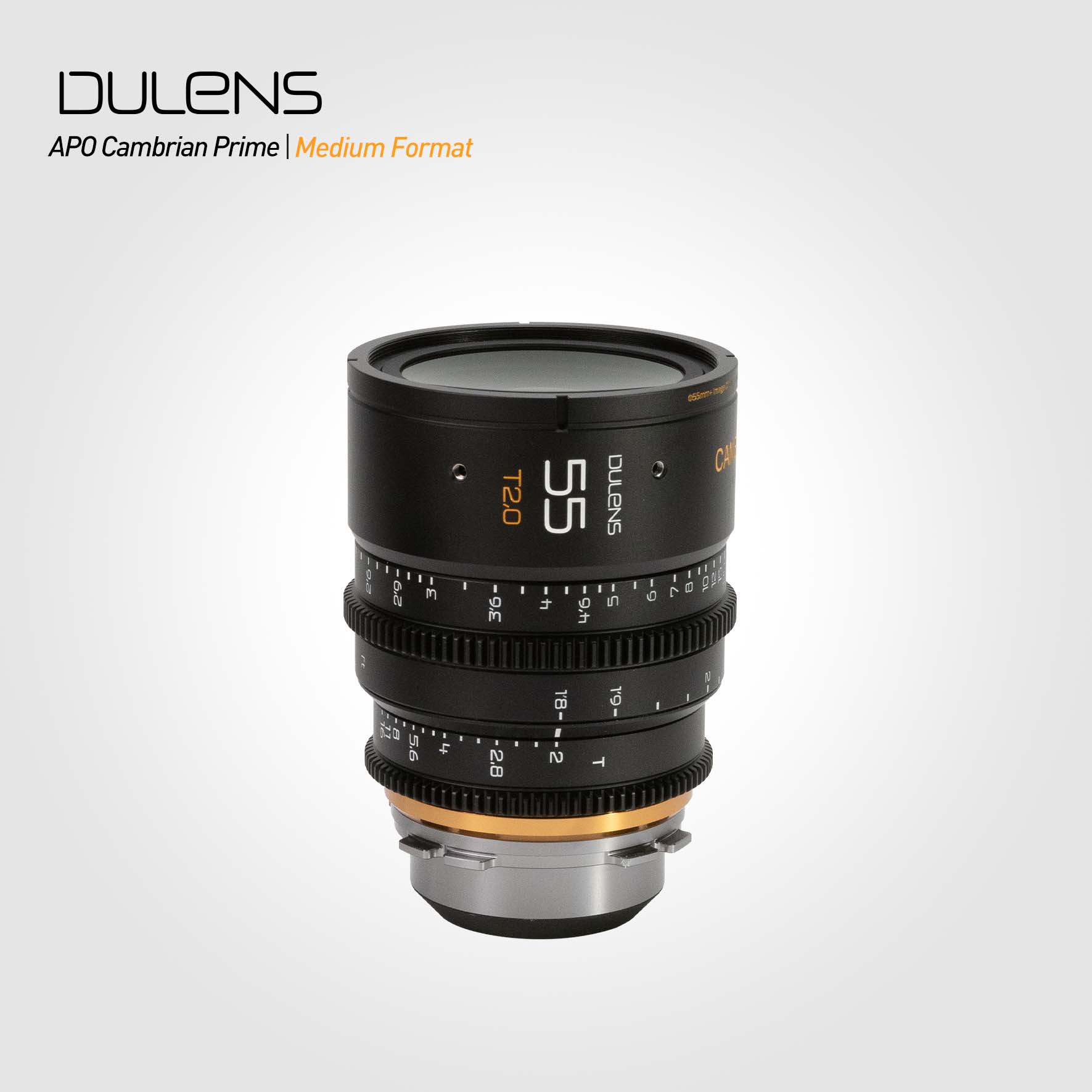
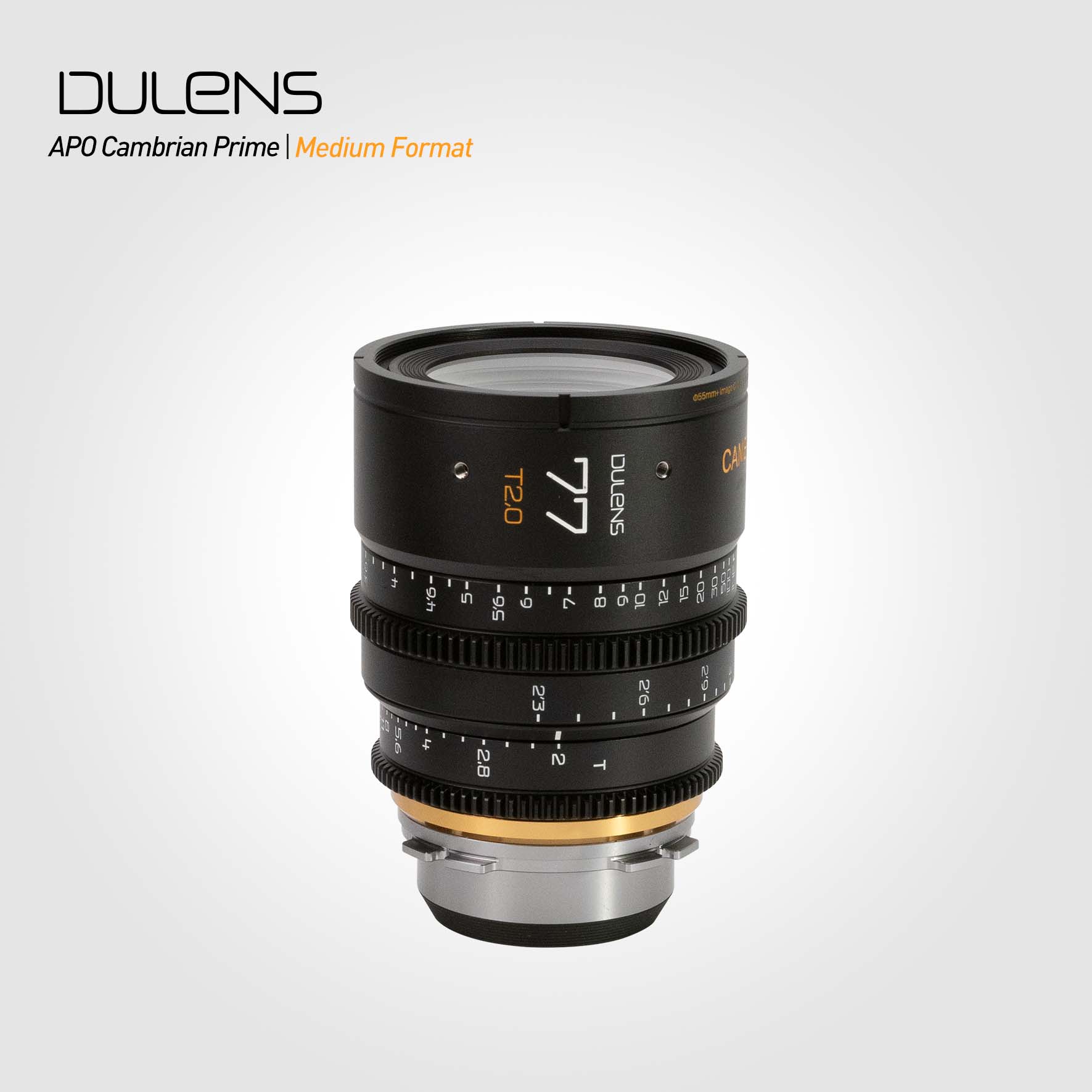
The complete set contains 24mm, 32mm, 40mm, 55mm, 77mm and 105mm, with PL mounts, metric distance markings and a six-slot protective case.
APO correction: clean colour, in and out of focus
APO stands for apochromatic. Glass refracts different wavelengths by different amounts. An optical design has to bring those colours back together: otherwise, a bright edge acquires colour fringes, or an out-of-focus highlight develops a different tint in front of and behind the focus plane. Lateral chromatic aberration separates colours across the image; longitudinal chromatic aberration separates their positions along the optical axis.
Cambrian combines a fully spherical optical design with strong apochromatic correction. Dulens describes near-zero chromatic aberration even in high-contrast scenes at wide apertures. The practical benefit is clean separation around backlit hair, polished metal and branches against a bright sky, without relying on stopping down to hide coloured edges. It also helps preserve the colour of defocused highlights instead of letting green and magenta fringes become part of the background.
This is an important distinction in the Cambrian look: vintage character does not have to mean vintage colour errors. Flare and defocus can give the image personality while the sharp subject remains colour-clean. For compositing and keying, cleaner edges also give you a better starting point.
Spherical optics: texture, bokeh and the focus transition
The Cambrian series uses fully spherical optics: each refracting surface follows a constant radius, rather than the changing curvature of an aspherical surface. Aspherics can produce outstanding lenses, but their manufacture can introduce fine concentric surface structures that become visible as rings inside defocused highlights. Cambrian takes a different design route, combining spherical elements with APO correction and a soft, rounded defocus character.
Rounded bokeh does not mean every highlight stays circular across the entire frame. Dulens explicitly describes a cat-eye character related to the Mini Prime series. Towards the edge, the lens can clip the effective light cone, turning an out-of-focus disc into a more oval or cat-eye shape. That shape is separate from the texture inside the disc and from the smoothness of the transition into defocus.
The transition through focus, texture within the defocused disc and off-axis pupil clipping are distinct parts of the rendering. Cambrian’s spherical prescription, APO correction and eleven-blade iris contribute to that balance. The Footage tab retains our production material alongside independent coverage of the series.
Cambrian MTF: fine detail with real contrast
MTF means Modulation Transfer Function: how much contrast an optical system preserves at a given spatial frequency. A line pair is one light line and one dark line. Low frequencies describe broader structures; higher frequencies describe finer detail. A lens can separate fine lines yet reproduce them with little contrast, so resolving a pattern and rendering it clearly are not the same achievement.
The manufacturer-attributed figure reported for Cambrian is an average MTF above 70% at 40 line pairs per millimetre. At that spatial frequency, a line pair occupies 0.025mm in the image plane. An MTF of 0.70 means 70% of the reference modulation remains at that frequency: it is a statement about contrast in fine structures, not 70% light transmission, a sharpness score or a resolution ceiling.
That is the relevant Cambrian proposition: fine texture should remain distinct, rather than relying on strong broad contrast to create an impression of sharpness. Fabric, hair and subtle surface detail need both separation and contrast. Combined with APO correction and the V+ coating, this gives Cambrian a modern optical foundation without requiring a completely flare-free visual character.
A complete MTF chart also describes position in the image field. Sagittal and tangential curves show contrast transfer in different orientations; their behaviour towards the edge reveals more than a centre crop. Aperture and focus distance matter too. The published average is not a minimum promised in every corner at T2, and it should not be read as a guarantee that a particular sensor resolution is fully resolved.
Cambrian’s medium-format image circle gives a full-frame sensor a smaller, central portion of the available field. This is useful for compositions that place faces and important detail away from the centre. Our interest is the combination of useful detail, clean colour and a pleasing transition into the background. Watch SLEEP AWAKE DREAM, filmed on the Kinefinity VISTA, alongside the projection image below.
V+ coating: modern microcontrast, vintage flare
Cambrian uses Dulens’ proprietary V+ coating. Its purpose is specific: retain strong microcontrast comparable to multicoated lenses, while preserving the softer flare character associated with vintage glass. Cambrian is not simply a low-contrast lens with a vintage label. Its appeal is the combination of a clear, detailed subject and a more expressive response to bright light.
At each air-to-glass surface, part of the light is reflected instead of transmitted. Thin optical coatings use interference to control those reflections. In a multi-element lens, reflected light can bounce between surfaces and find its way back to the image plane. The coating, optical layout and internal baffling together determine how much unwanted light reaches the sensor and what form it takes.
A distinct ghost is a recognisable reflection of a bright source. Veiling glare is a broader wash of stray light that lifts shadow levels and reduces scene contrast. Neither is the same as loss of fine-detail resolution. A lens can preserve texture in the focal plane while an entering light source changes local contrast and the atmosphere of the image. This is the useful way to understand V+: detail and flare character are not opposites.
The amount and distribution of flare depend on source angle, intensity and the pupil and baffling geometry. Cambrian’s V+ signature is therefore scene-dependent: high microcontrast in the image-forming bundle can coexist with a local contrast reduction from veiling glare.
Flare can soften the apparent contrast around a bright source, but it is not the camera’s highlight roll-off. The sensor, exposure and tonal transform still determine how recorded highlights approach clipping. With Cambrian, describe what the optics contribute: colour-clean focus, retained fine-detail contrast and a vintage-inspired flare response.
MTF comparison: modulation and measurement conditions
Consider two lenses under the same test conditions at 40 lp/mm. If one transfers 50% of the reference modulation and another transfers 70%, the second retains 1.4 times as much modulation in that fine pattern. At 80%, it retains more again. This does not mean 40% more resolution, and it does not mean the entire image looks 40% sharper: it describes contrast transfer at one particular detail scale.
The reported Cambrian average above 70% at 40 lp/mm points to strong fine-detail contrast. It is more informative than a high value at 10 lp/mm alone, because a lens can reproduce broad shapes with punch while losing contrast in finer texture. For a fair comparison with another lens, use the same spatial frequency, aperture, focus distance, image height and measurement method. A competitor’s 90% at 10 lp/mm cannot be ranked against Cambrian’s 70% at 40 lp/mm.
The full curve matters more than a headline number. A strong centre with a steep fall towards the edge produces a different image from a lens that maintains contrast more evenly across the field. These percentages are illustrative comparisons, not measured results for named competing lenses.
40 lp/mm in context: three familiar ZEISS primes
To understand why Cambrian’s reported average above 70% at 40 lp/mm attracts attention, consider the same spatial frequency in the official charts for three familiar full-frame primes. The values below are approximate readings at the image centre, where the sagittal and tangential curves meet. They are not whole-frame averages.
| Lens | At f/1.4 | At f/4 |
|---|---|---|
| ZEISS Planar T* 50mm f/1.4 — Classic | 37% | 60% |
| ZEISS Milvus 50mm f/1.4 | 40% | 75% |
| ZEISS Otus 55mm f/1.4 | 67% | 83% |
The Otus example shows why retaining around 70% modulation at this fine-detail frequency is a serious optical target, rather than an ordinary contrast specification. The Milvus and Planar charts also show how much the result changes when the aperture closes. Strong fine-detail transfer must be read together with aperture and performance across the field.
These references put Cambrian’s reported figure into perspective; they are not a matched head-to-head test. Cambrian’s published claim is an average with no complete aperture and field-sampling definition supplied, while the table shows specific centre readings at f/1.4 and f/4. A T-stop describes transmission, not the geometrical aperture used for an MTF comparison. We therefore do not claim that Cambrian beats Otus or every lens in the table. What makes its proposition impressive is the combination of a high reported fine-detail MTF, medium-format coverage, fast cine apertures and vintage-inspired flare in a compact lens set.
Explore the original ZEISS curves, including sagittal and tangential behaviour towards the corners: Planar T* 50mm, Milvus 50mm and Otus 55mm.
Medium-format coverage, also useful on full frame
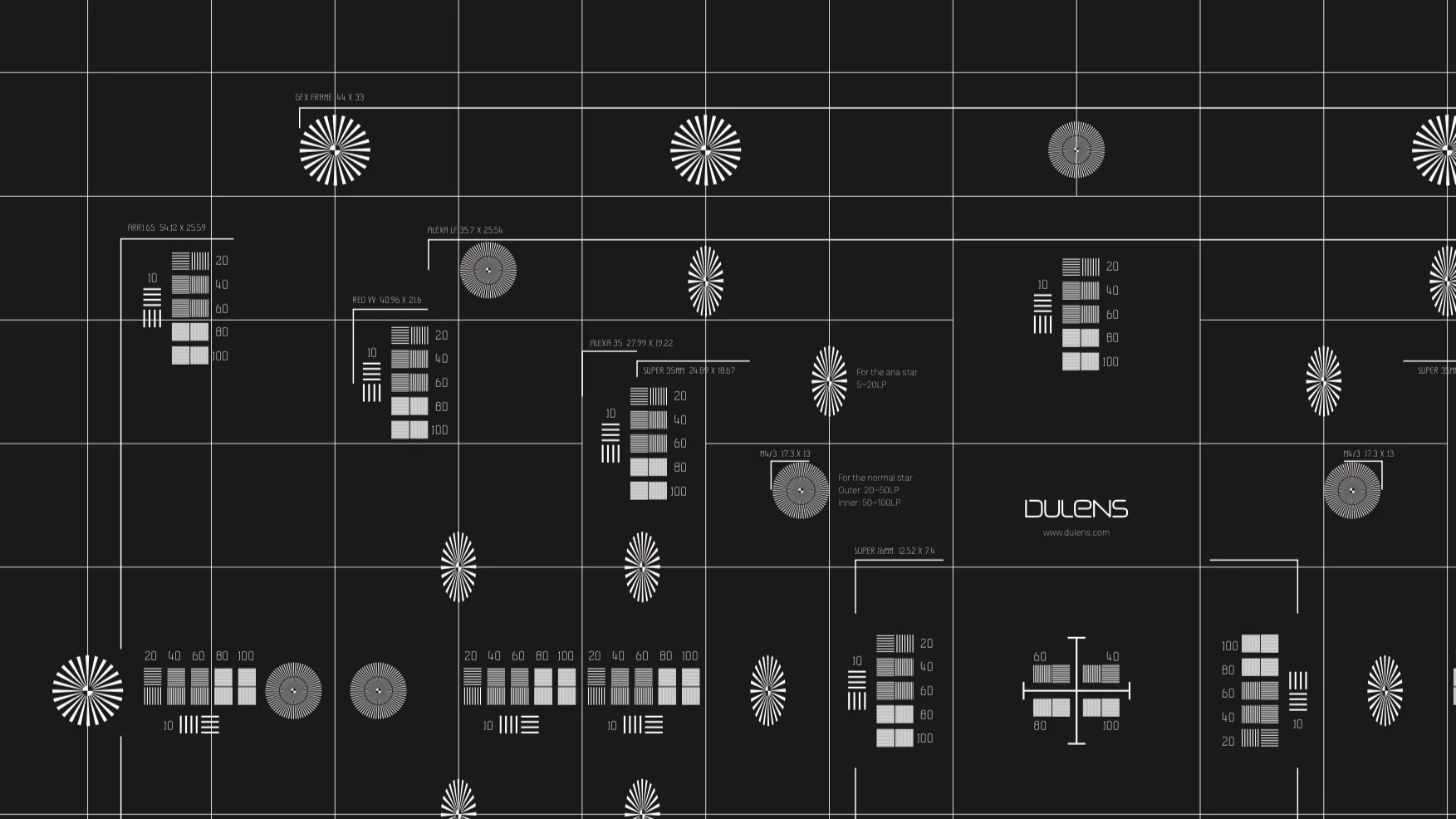
Cambrian covers Super 35, full frame, VistaVision, Fujifilm GFX 44 × 33 and ALEXA 65 formats. Full frame uses a smaller portion of that image circle than medium format, so you do not need a 65-format camera to make use of this series. It is a lens set you can build around your present camera and carry into larger-format projects.
Recorded field should be assessed by active image dimensions and corner image height, not by assigning a fixed shooting role to each focal length. Cambrian’s coverage reserve is especially relevant to off-axis contrast transfer and illumination on recording areas smaller than its medium-format envelope.
A larger image circle: the advantage for corner-to-corner detail
On a full-frame or large-format sensor smaller than Cambrian’s medium-format coverage, the camera records an inner portion of the lens’s image circle. The corners of your recorded frame are therefore not the outermost corners of the lens’s available image. This is a practical optical advantage, not just spare coverage for a future camera.
Off-axis aberrations such as astigmatism and coma, together with field curvature, often become more demanding towards the outer field. Recording a smaller portion leaves the most extreme field angles outside your frame. On a lens whose performance falls towards the periphery, this gives more even sharpness and fine-detail contrast from corner to corner, as well as less exposure to outer-field light fall-off.
A smaller recorded field does not alter transfer at the same image height; it changes the image height at the recorded corner. The practical advantage is the reserve in off-axis correction and illumination, rather than an increase in centre resolution.
Cambrian and APO Mini Prime: the differences that matter
Cambrian is a separate optical series, with a larger coverage envelope and its own prescriptions. It is not an APO Mini Prime in a larger housing. Its optical distinction is the combination of medium-format correction, high reported fine-detail transfer and V+ coating rather than a change in focal-length labelling.
The Cambrian 24–77mm lenses open to T2.0, while the Mini Prime 31mm and 43mm open to T2.4. That is roughly half a stop more light. A T-stop describes light transmission, so the comparison is directly useful when setting exposure. The Cambrian 105mm opens to T2.2.
For a set that will work across full-frame and larger cinema formats, we recommend building around Cambrian. For an existing Mini Prime owner, the choice is about the focal lengths, coverage and visual character you want for your next project.
For large-format versatility and light-gathering capability, Cambrian is the superior platform. Its medium-format coverage goes beyond the Mini Prime series’ full-frame remit, and its T2.0 aperture from 24–77mm gives you more exposure flexibility than the T2.4 Mini Prime 31mm and 43mm. The optical character also differs: Dulens presents Mini Prime around low-contrast vintage rendering, while Cambrian’s V+ approach explicitly aims to retain high microcontrast alongside vintage-inspired flare.
For cinematographers seeking a more detail-forward foundation with room to work across larger sensors, Cambrian is our step-up recommendation. That does not make Mini Prime obsolete: its lower price, smaller bodies and more overtly airy vintage rendering remain distinct advantages. We do not turn the Cambrian MTF average into a numerical sharpness comparison with Mini Prime without matching measurements.
Separate optical series: Dulens APO Mini Prime 21mm
The Dulens APO Mini Prime 21mm T2.6 is available separately. It has a different prescription and coverage envelope; its optical match with Cambrian is a production-specific consideration, not an extension of the Cambrian medium-format specification.
It is sold separately and is not part of the six-lens Cambrian set. Its sensor coverage differs from Cambrian’s medium-format coverage. Contact Gafpa Gear for coverage and integration requirements.
Built for practical cinema work
Each Cambrian shares an 80mm front diameter and a 72mm filter thread. You can plan your front accessories around one size instead of rebuilding the setup for every focal length. A 270° focus rotation gives you space for precise manual pulls, and the eleven-blade iris forms the aperture as you stop down. Our set has metric focus markings.
Close focus ranges from 0.35m on the 24mm and 32mm to 0.85m on the 105mm, measured from the image plane. The individual distances and apertures are listed in the Specifications tab. PL mounting makes the set a straightforward choice for cinema cameras and compatible PL adapters.
The complete set and our footage collaboration
The six-lens set includes its protective case and shims. At €8,999 excluding VAT, it saves €1,195 compared with buying six individual lenses at €1,699 each.
We are also offering one complete Cambrian set at 50% off: €4,499.50 excluding VAT, in exchange for some original footage filmed with the lenses that we can share. Keep it simple: no full review, large following or extensive promotional campaign required. Send us your filming idea to arrange the collaboration before purchase.
Dulens support from Gafpa Gear provides technical support for coverage, PL integration and production requirements.
Dulens APO Cambrian Prime specifications
Six PL cinema primes with medium-format coverage. Close focus is measured from the image plane.
| Lens | Max. aperture | Close focus | Weight | Elements / groups |
|---|---|---|---|---|
| 24mm | T2.0 | 0.35 m | Approx. 850 g | 14 / 10 |
| 32mm | T2.0 | 0.35 m | Approx. 800 g | 14 / 12 |
| 40mm | T2.0 | 0.42 m | Approx. 780 g | 13 / 10 |
| 55mm | T2.0 | 0.51 m | Approx. 750 g | 11 / 10 |
| 77mm | T2.0 | 0.68 m | Approx. 790 g | 11 / 8 |
| 105mm | T2.2 | 0.85 m | Approx. 810 g | 10 / 7 |
Image circle and sensor coverage
The Cambrian image circle covers Super 35, full frame, VistaVision, Fujifilm GFX 44 × 33mm and ARRI ALEXA 65 formats. Full-frame sensors use a smaller central portion of this medium-format image circle.
Shared specifications
- Mount: PL
- Focus scales on this set: metric
- Front diameter: 80mm
- Filter thread: 72mm
- Focus rotation: 270°
- Iris blades: 11
- Minimum aperture: T16
- Optical design: apochromatic, fully spherical
- Coating: Dulens V+
- Included: six-slot protective lens case
Watch footage filmed with Dulens Cambrian lenses
SLEEP AWAKE DREAM — Gafpa Gear / Norbert Storm
Our film was shot entirely on the Kinefinity VISTA, using a Ronin S and tripod, with lenses including Dulens Cambrian primes. The grade uses Gafpa Gear’s upcoming VISTA-to-ARRI Log transform.
Watch SLEEP AWAKE DREAM on YouTube.
Gafpa Gear’s Cambrian 40mm video
A closer look at the 40mm from the Cambrian range.
Explore the six Cambrian prime lenses
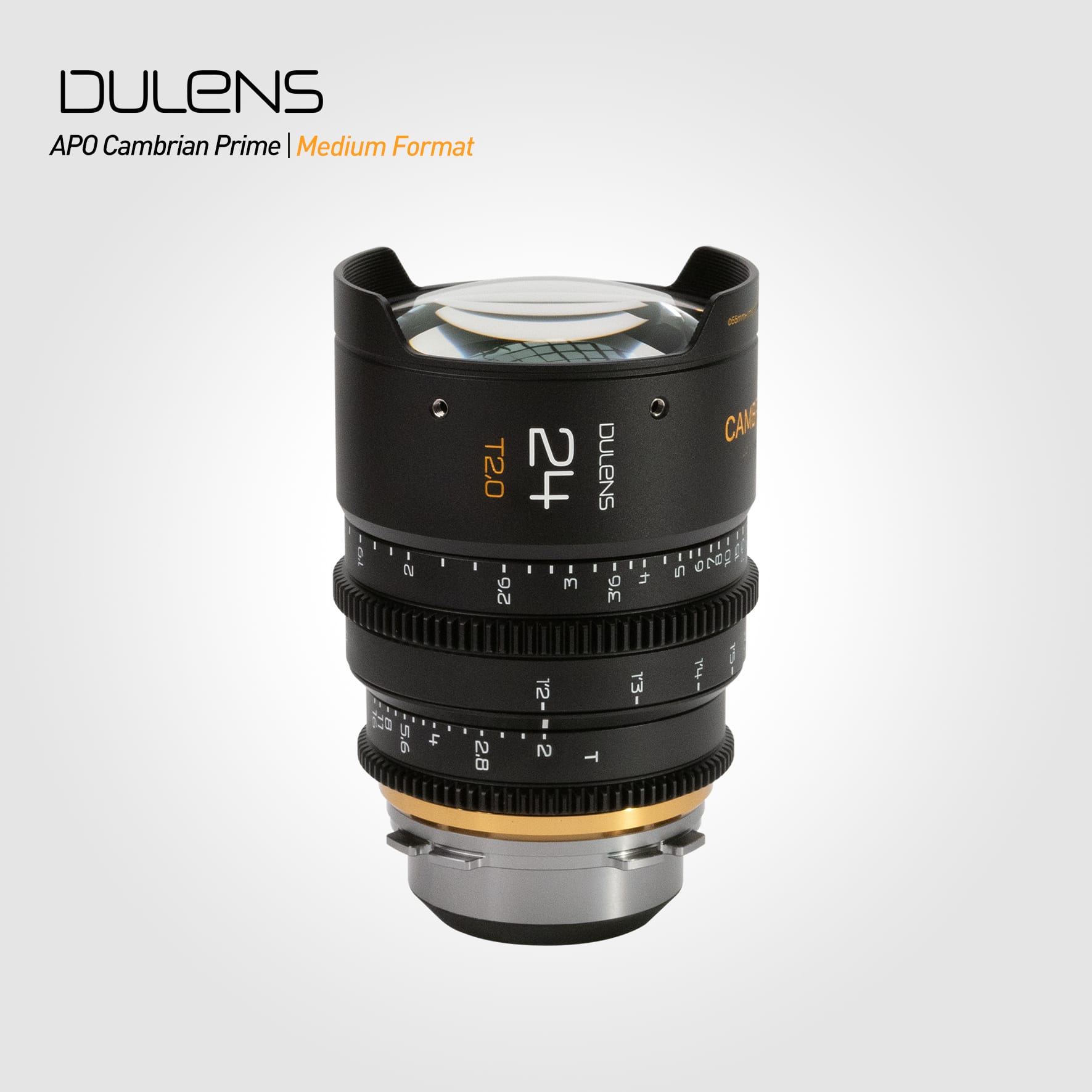
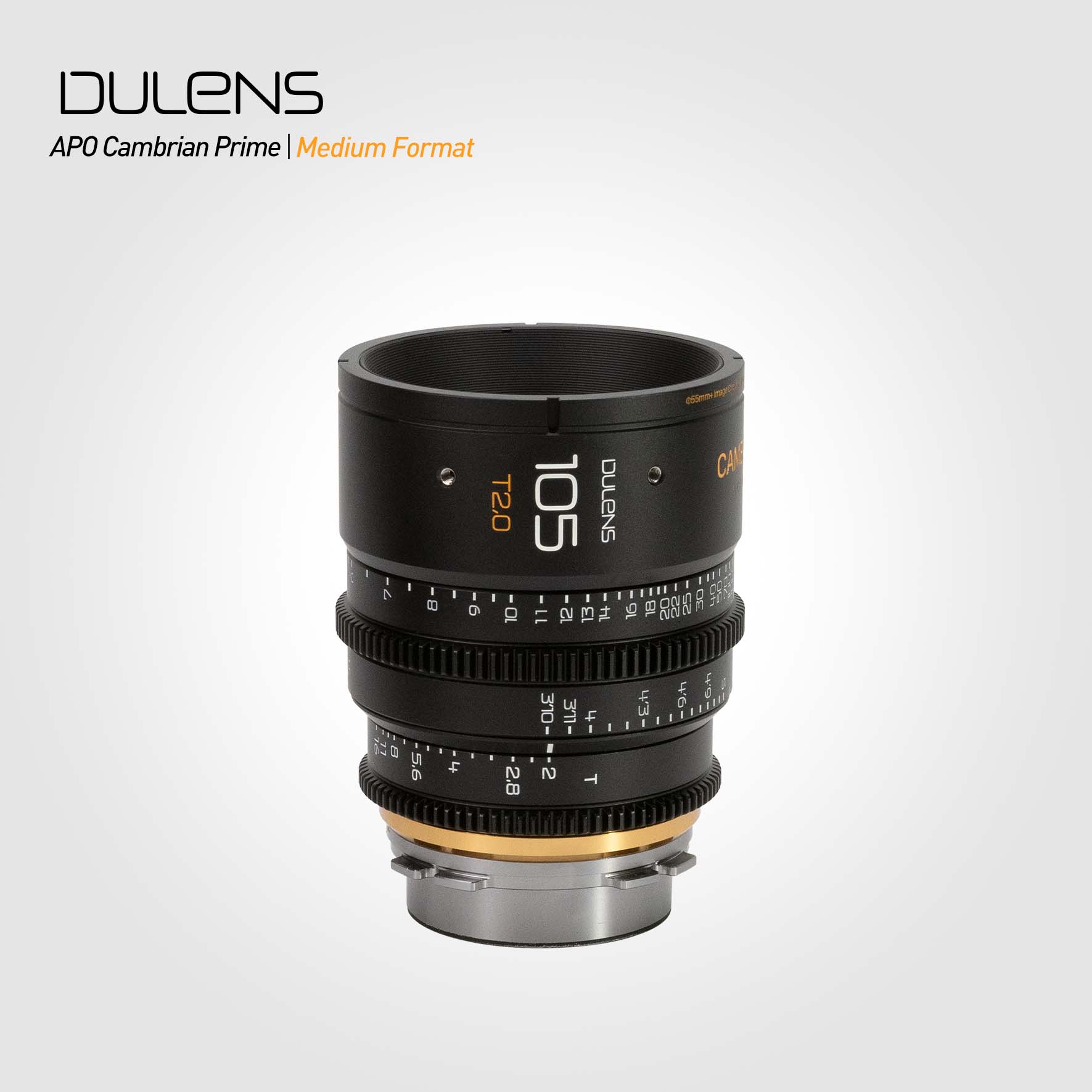
Product photographs from our existing Cambrian gallery. Follow a focal length to see its individual product page.
Cambrian reviews, first looks and further reading
Explore independent editorial coverage alongside Gafpa Gear’s own footage. Read Newsshooter’s reports from NAB and IBC below.
Newsshooter: NAB 2025 first look
Matthew Allard ACS introduces the Cambrian series from the NAB launch.
Read Newsshooter’s Cambrian first look — 6 April 2025.
Newsshooter: 24mm and 32mm at IBC 2025
A follow-up report covering the wider focal lengths shown in Amsterdam. For current lens specifications, use our Specifications tab and the manufacturer links.
Read Newsshooter’s IBC Cambrian report — 14 September 2025.
Manufacturer information
Visit the Dulens APO Cambrian series page for current manufacturer information.